Our 2026 Build Season in the Peace Region (and Why We're Ready for Winter)
The 2026 Season at a Glance
Every spring the frost lets go, the ground firms up, and our crews head out across the Peace Region. The 2026 season was a busy one. We built shops and post-frame buildings, a barn, an aircraft hangar, a sea-can cover, foundations for a home addition, commercial concrete, a full exterior reclad and a long list of residential finishing work.
This recap walks through what we built, grouped by type of project, with real photos from our crews. If you're thinking about a build of your own, it should give you a good idea of the range of work we take on. And as the snow starts to fly, we'll also explain what we keep doing all winter and why now is the right time to book your spring 2027 project.
Shops and Post-Frame Buildings
Shops were the backbone of our season, as they are most years in the Peace Region. Farmers, tradespeople, hobbyists and small businesses all need covered, secure space that stands up to our winters. Post-frame construction remains the most popular way to get there: it goes up quickly, spans wide open floors and handles local snow loads when it's engineered properly.
A few of the buildings from this season:
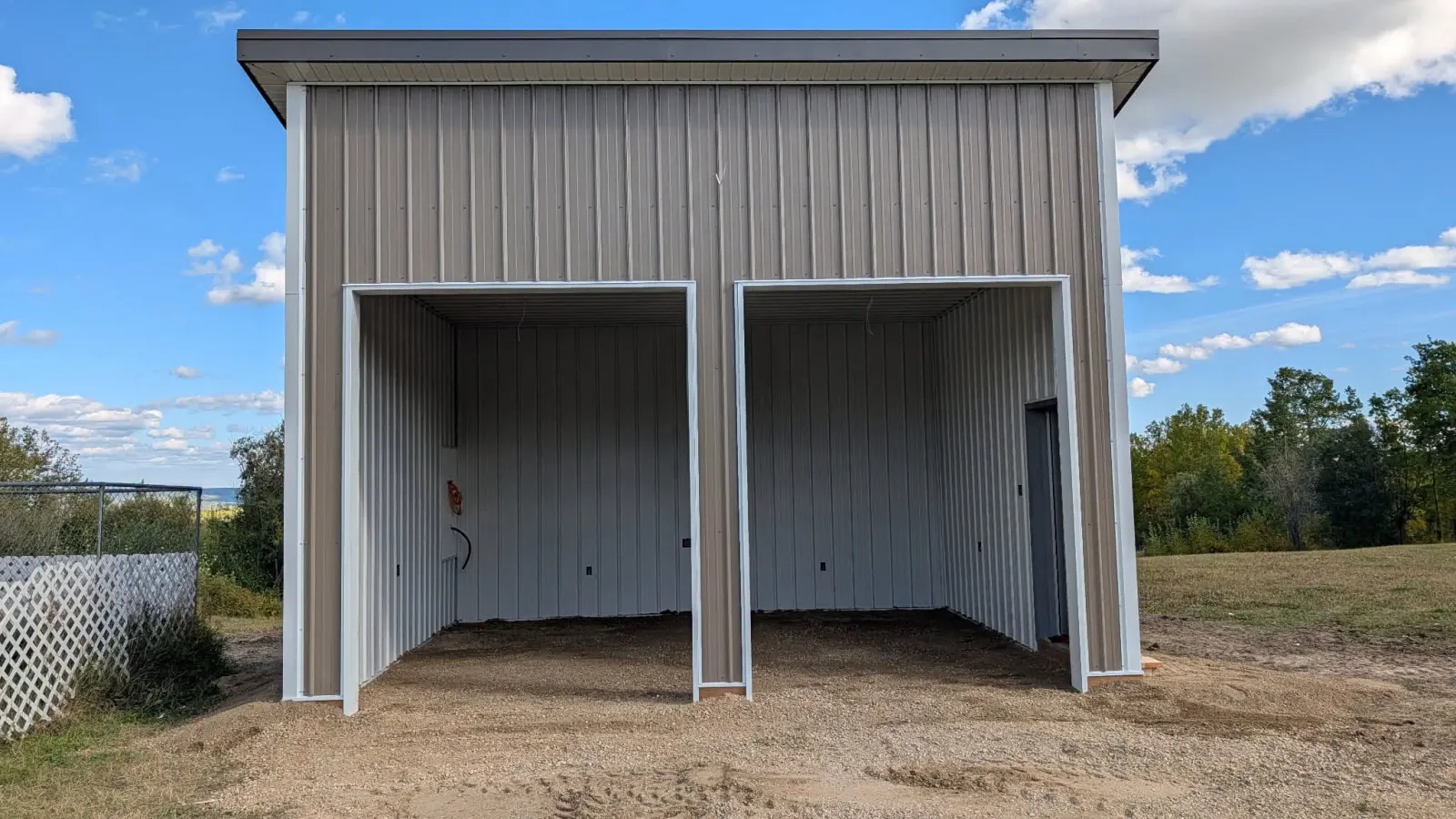
- A two-bay shop with tan steel cladding, crisp white trim and two large overhead openings, shown at the top of this article.
- A green post-frame shop with white trim and a single large door opening, set on open farmland with room to grow.
- A dark grey garage with black trim, a white overhead door, a man door and exterior lights. It is a good example of how a simple colour combination makes a building look sharp.
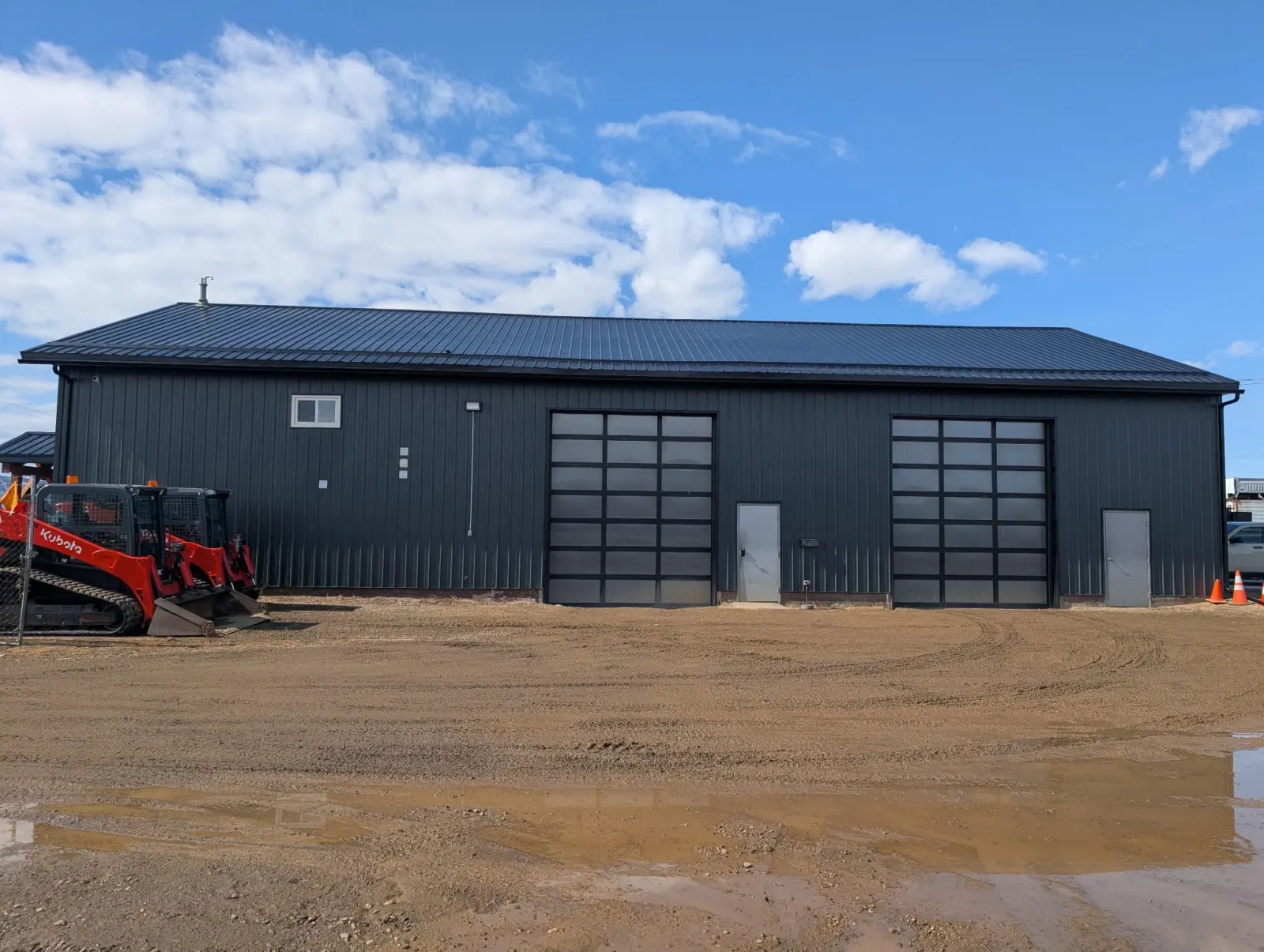
- A dark shop with full-view glass overhead doors, two bays and matching man doors. The glass panels bring daylight inside and give the building a modern, commercial look.
- A shop with sea containers built into its ends, a large sliding door on the side and a window, giving the owner lockable storage plus a big open bay.
- A bright white shop with a tall overhead door opening and exposed timber accents in the gable.
Behind every finished shop is a lot of work you don't see once the steel is on. This season included setting long runs of engineered roof trusses on a hilltop site with views across the valley, and interior views of a finished truss package with steel sheeting above. Inside, one shop was finished with white steel liner on the walls and ceiling, LED strip lighting and a ceiling fan, ready for heat and year-round use. In another, we trenched the floor for plumbing and drains before the slab, which is far easier than cutting concrete later.
If you're still deciding on dimensions, our shop size guide covers how to plan for equipment, door sizes and future growth. For the full build process, see our shop construction page.
Barns, a Hangar and a Sea-Can Cover
Not every building is a shop. This season we also built:
- A barn with lean-to in charcoal steel, with an open centre bay and stained timber posts carrying a long covered lean-to along one side. It sits right next to the round bales, which is exactly where a working farm needs it. Learn more about barn construction.
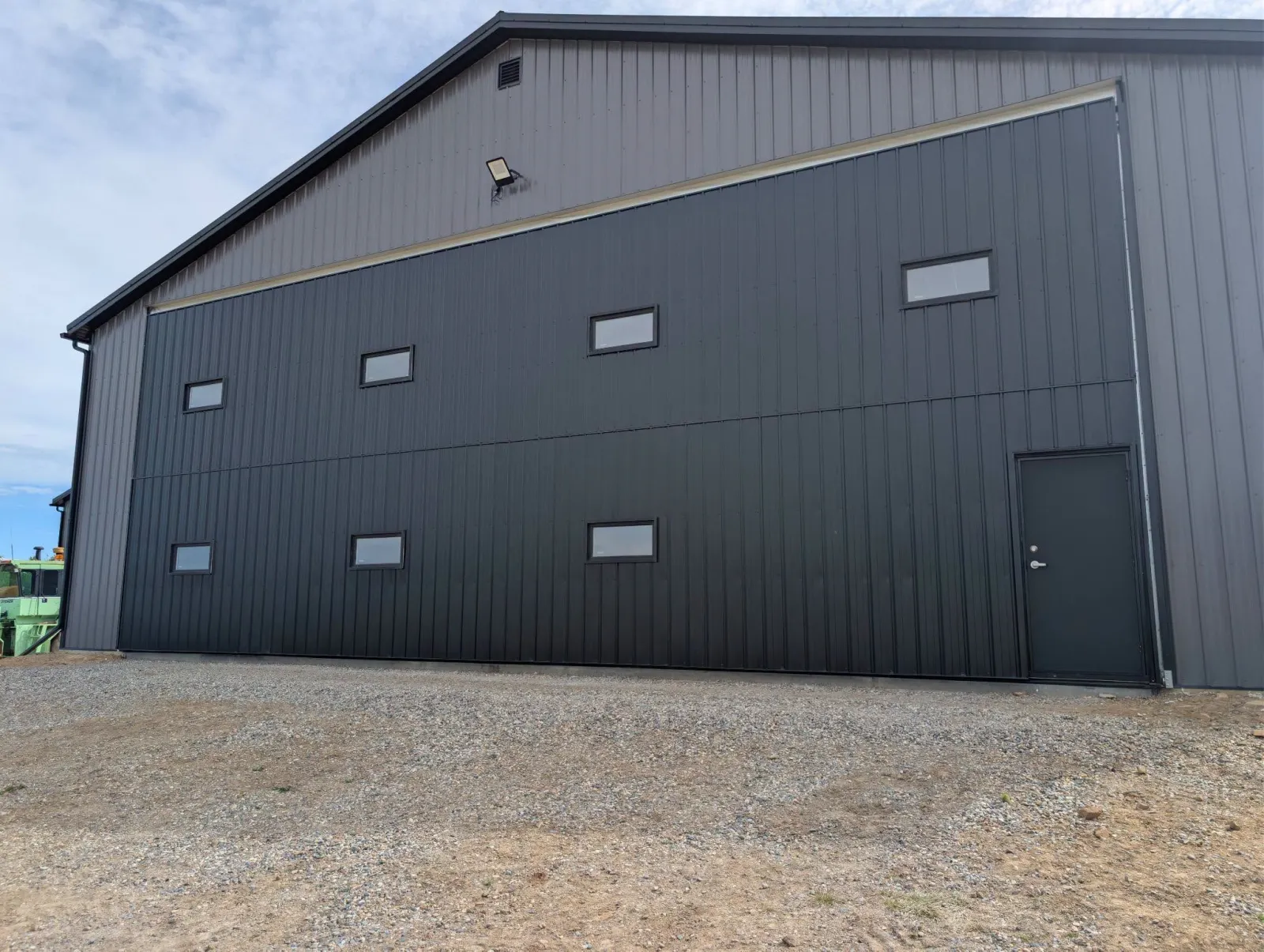
- An aircraft hangar with a large black hydraulic door, rows of windows across the door panels and a man door built into it. Hangars need wide clear spans and careful door framing, and this one shows what that looks like done right. See our aviation construction page.
- A sea-can cover: two shipping containers set apart, with a white and green post-frame roof spanning between them. It turns a pair of storage containers into a large covered work and parking area for far less than a fully enclosed building.
Foundations and Concrete Work
Good buildings start below ground, and that matters more here than almost anywhere. With frost going 6 feet or deeper in much of the region, the foundation has to be designed for it. Our frost depth and snow loads guide explains why.
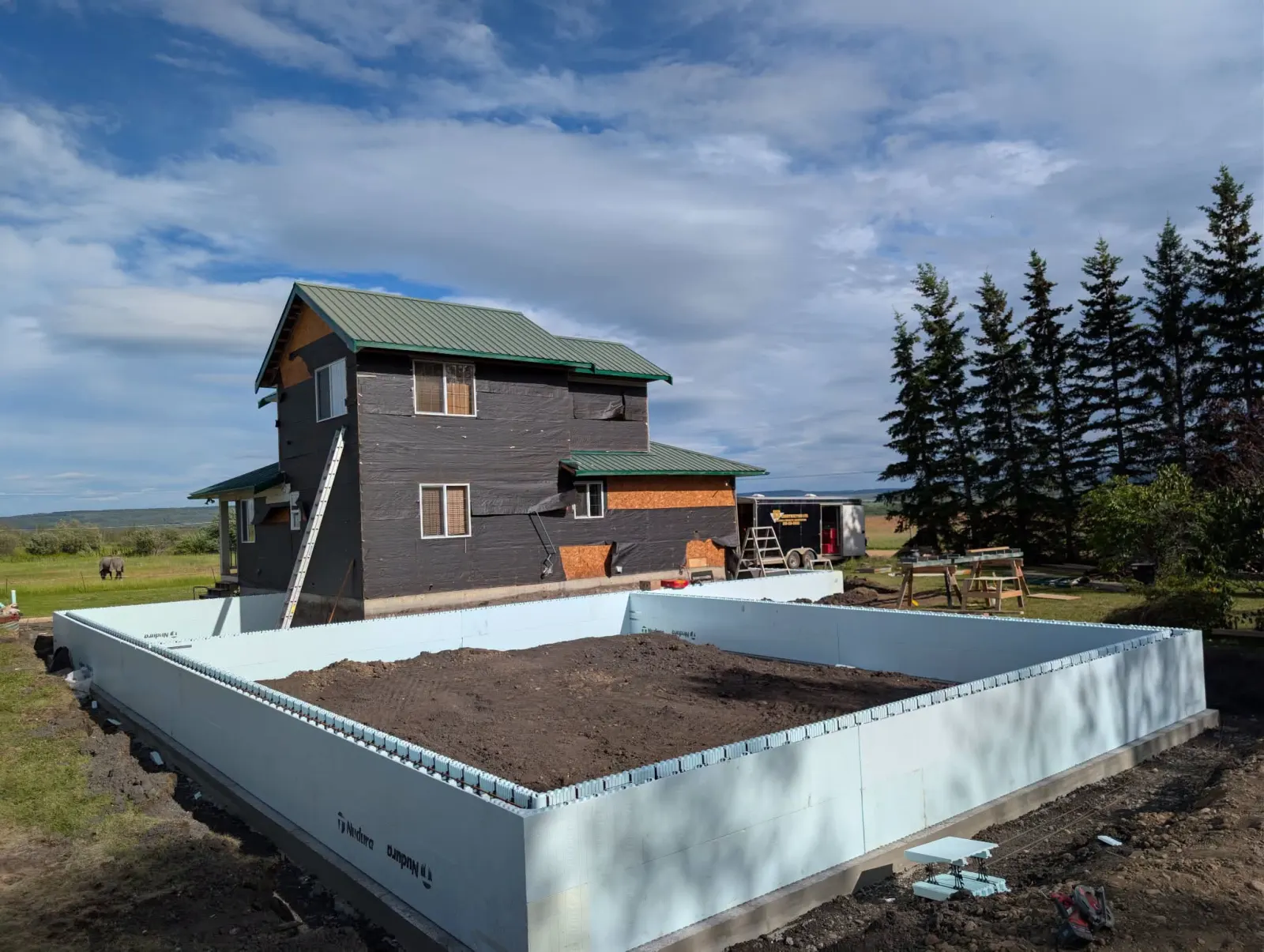
One project this season shows a full foundation sequence for an addition beside an existing two-storey home:
- Footings: the site was excavated, and formed footings were poured with rebar dowels standing up to tie into the walls above.
- ICF walls: insulated concrete forms were stacked on the footings. ICF leaves rigid insulation on both faces of the concrete wall, which is a strong fit for cold-climate foundations.
- Slab pour: with the walls in place, a concrete pump truck placed the slab while the crew screeded and finished it.
We also took on commercial concrete this year, including new sidewalks between institutional buildings. The photos show the formwork and rebar mat laid over compacted gravel, then the finished walkway with clean control joints running along the building. Not sure which foundation fits your project? Read choosing the right foundation or see our concrete forming services.
Site work rounded things out, including a levelled gravel pad with a row of posts set along each side. Good drainage and a solid base are what keep a pad usable through spring breakup.
Before and After: An Office and Shop Reclad
One of our favourite projects this year was a full exterior makeover of an existing office and shop building. Before, it had faded horizontal siding, worn trim and a tired entrance. After, the whole building is wrapped in dark vertical steel cladding with a matching roof, fresh trim and new overhead doors with full-view glass panels.
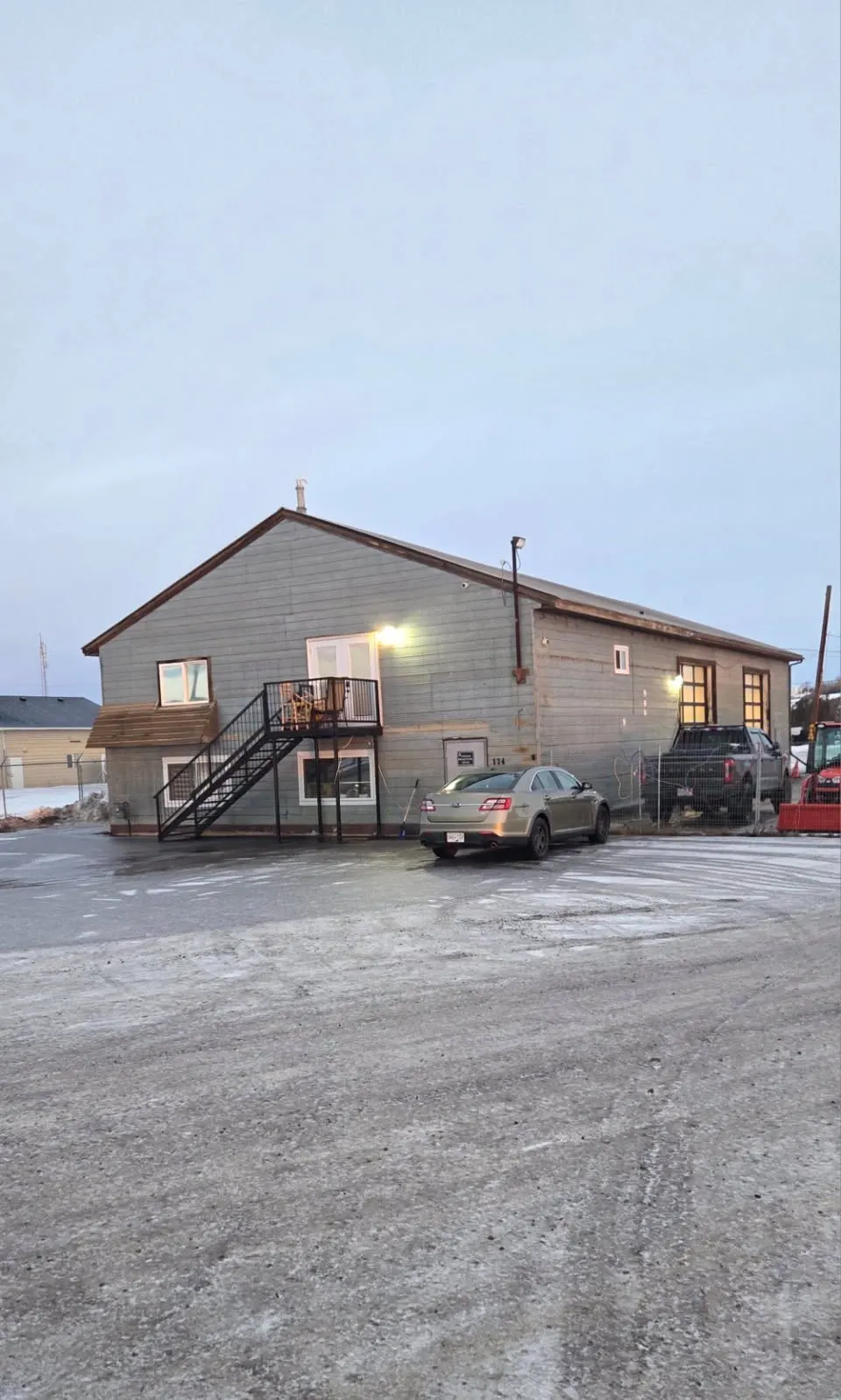
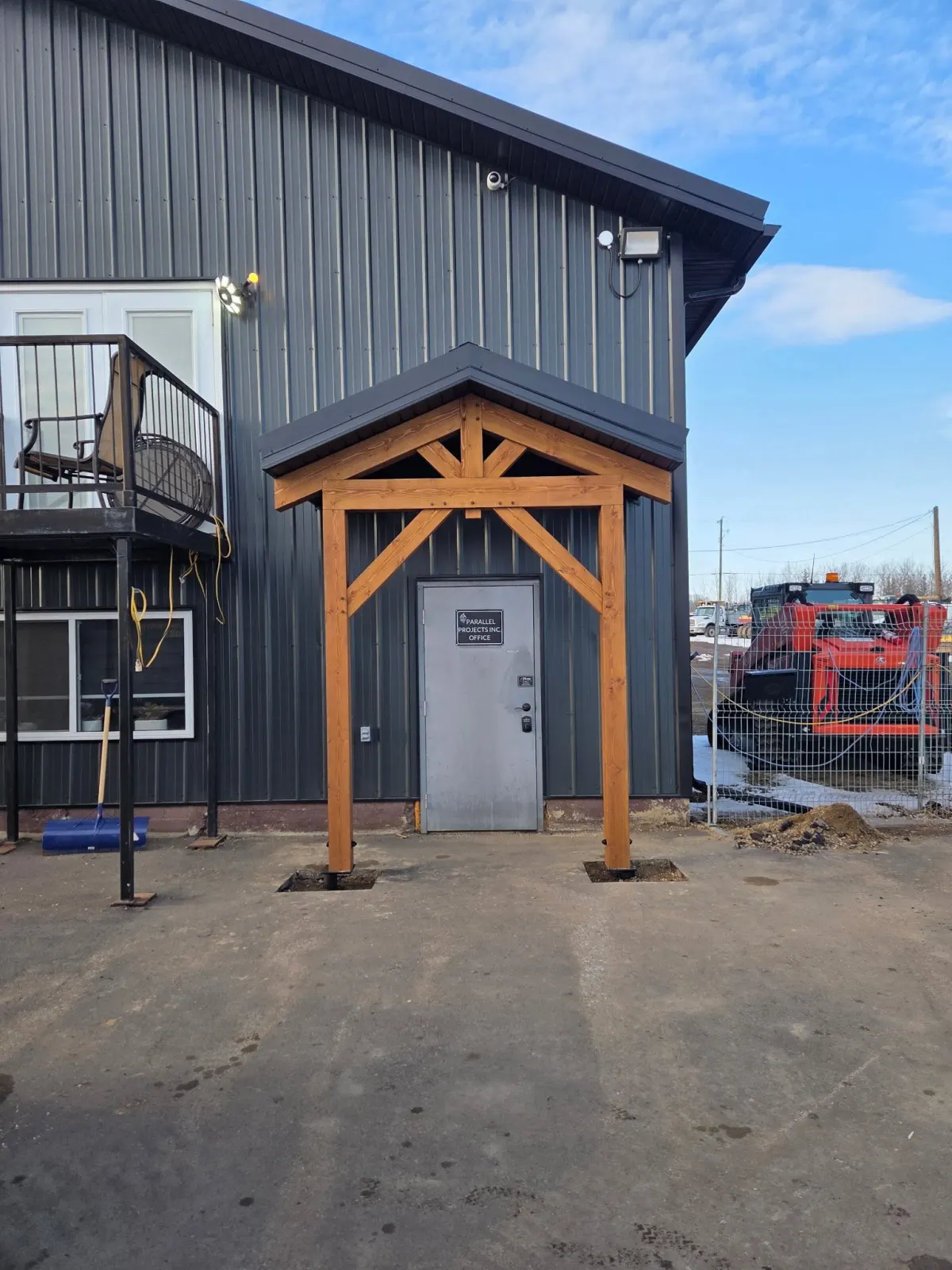
The finishing touch is a timber frame entry canopy over the office door, with stained posts, knee braces and a king post truss under a steel roof. It gives a utilitarian building a welcoming front door. If you have a building with good bones and a tired exterior, a reclad is often far more cost-effective than starting over. Our renovations guide covers what to expect.
Residential Finishing Work
Alongside the big structures, our crews finished plenty of residential projects that make a home better to live in:
- Bathroom tile: a walk-in shower with large-format marble-look wall tile, a hex mosaic floor, a built-in bench and a recessed niche, with an uncoupling membrane going down on the main floor before tile.
- New home setup and shop: screw piles, setting the home and welding it to the piles, a front porch with railings and stairs, a long run of stained cedar privacy fence, and the full shop beside the house. We also handled the project admin from start to finish.
These are the projects that turn a house into a finished property. See our custom home construction page or the home additions guide if you're planning something bigger.
Why We're Ready for Winter
Cold weather doesn't shut us down. Plenty of work carries on through a Peace Region winter, and some of it is actually best done then:
- Insulation: spray foam and blow-in insulation are ideal winter jobs. If your shop or attic feels cold right now, that's the best time to fix it. Our guide to insulating an existing shop walks through the options.
- Interior renovations: bathrooms, basements and interior updates move ahead regardless of the weather outside.
- Shop interiors: liner panels, lighting, mezzanines and finishing work inside buildings that are already closed in.
- Screw piles: screw piles can be installed in frozen ground, so your foundation can be ready before spring. Read more in our screw piles guide.
For a deeper look at what's possible after freeze-up, see our winter construction guide.
Now Is the Time to Book Spring 2027
The owners who get the first spring build slots are the ones who plan over the winter. Design, engineering, permits and material orders all take time, and none of them depend on the weather. If you start now, your project can be ready to break ground as soon as conditions allow, instead of waiting in line once everyone else calls in April.
Whether it's a shop, a barn, a hangar, a foundation or a renovation, we'd be glad to talk it through. Call us at (250) 219-5853 or request a free estimate. You can also browse more photos on our project gallery.
Frequently Asked Questions
Does KB Construction work through the winter?
Yes. Winter is when we focus on spray foam and blow-in insulation, interior renovations, shop interiors and screw pile foundations, which can be installed in frozen ground. We also use the winter months to plan and price spring builds.
When should I book a shop or building for spring 2027?
As early as you can. Design, engineering, permits and material orders all take time, and the best spring slots fill up first. Booking over the winter means your foundation can go in as soon as ground conditions allow.
Can foundations go in during winter?
Screw piles can be installed year-round, including in frozen ground, so a building can be ready to frame as soon as the weather turns. Concrete work in winter needs heating and protection while it cures, so many owners plan concrete for the warmer months.