How Many Screw Piles Do I Need? Spacing, Sizes and Lifespan
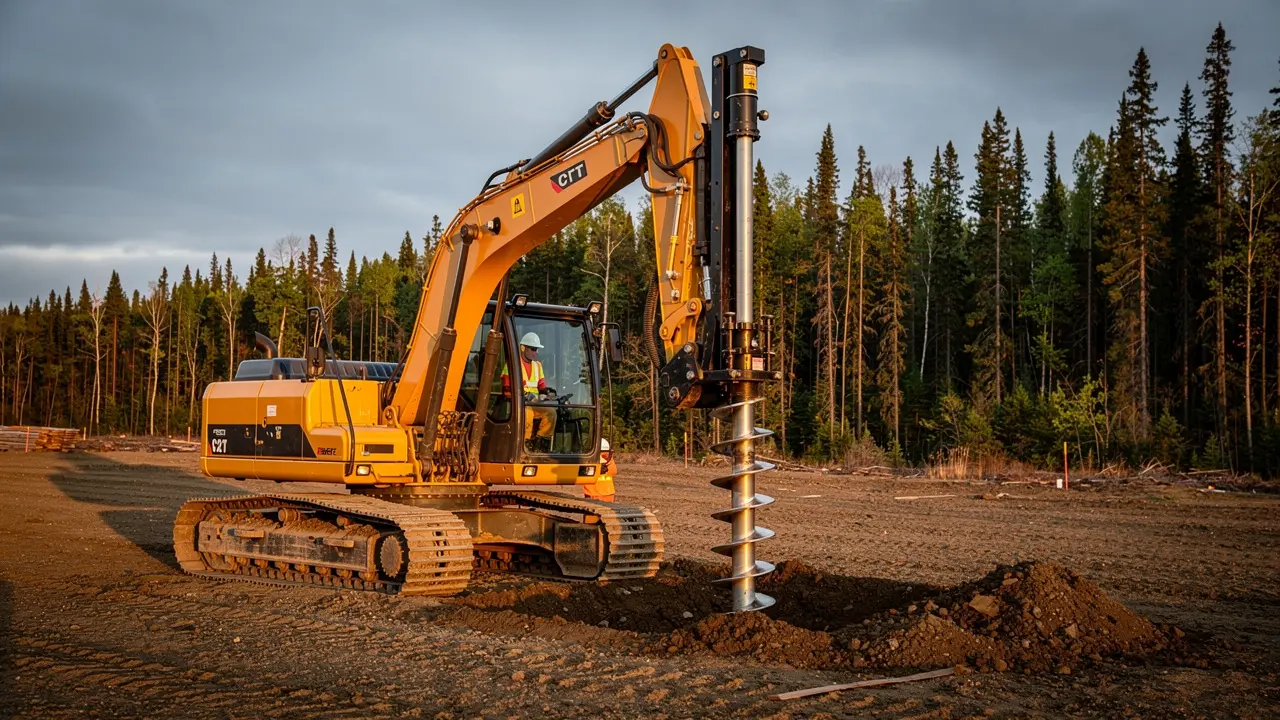
The Short Answer
It is the first question almost everyone asks, and the honest answer is: it depends on what you are building, how heavy it is, and what is under the ground. A small deck might need six piles. A typical 30x40 shop often lands somewhere around 12 to 16. A home or a large post-frame building can need several dozen.
This guide explains what drives that number, gives you rough planning ranges for common projects in the Peace Region, and covers the other questions that come up right after: pile sizes, spacing, how long installation takes, and how long screw piles last. If you are new to them, start with our screw pile foundations guide for the basics.
What Sets the Number of Piles
Every pile carries a share of the building's weight down into stable soil. The count is simply the total load divided by what each pile can safely carry, then arranged so that every beam, wall and post is properly supported. Four things drive it:
- Load: The weight of the structure itself, plus snow on the roof, people and contents inside, and wind pushing on the walls. Snow matters a lot up here. Ground snow loads in our region run from roughly 1.7 kPa in Fort St. John to about 2.8 kPa in Tumbler Ridge (see our frost depth and snow load guide).
- Span: How far the beams or floor system can reach between supports. Bigger beams can span further, which means fewer piles. Lighter framing needs supports closer together.
- Soil: Each pile's capacity depends on the soil its helix sits in. Firm clay or dense gravel holds more than soft, wet clay or loose fill. In practice, installers confirm capacity on site by watching the installation torque as each pile goes in.
- Frost: Peace Region frost commonly reaches 6 to 8 feet. Piles have to anchor well below that and resist frost grabbing the shaft and lifting it (more on that below).
Point loads change the layout too. Overhead door openings, interior posts, mezzanines, hot tubs and heavy equipment all need their own support, which is why two buildings with the same footprint can end up with different counts.
Typical Screw Pile Spacing
Spacing is the distance between piles along a beam or wall line. These are rough planning ranges only, so you can picture the layout. Your engineer or installer sets the real numbers for your site:
- Decks and landings: often 6 to 8 feet apart along each beam
- Garages and stick-framed shops on a beam or grade beam: often 8 to 12 feet apart around the perimeter, plus support for any interior beam lines
- Post-frame buildings: piles usually line up with the building's posts, so the post spacing largely sets the pile spacing
- Homes, additions and modular homes: set by the engineered foundation plan or the manufacturer's support plan, and usually closer together because the loads are higher
Closer spacing is not a sign of a weak design. It often lets you use lighter beams, and the engineer is balancing pile count against beam size to find the best value for the whole foundation.
Rough Planning Ranges by Project
The table below is illustrative only. It shows how a rough count comes together so you can budget and plan. It is not a design, and your actual count will come from engineered drawings and conditions on your site.
| Project | How the count is usually worked out | Rough range |
|---|---|---|
| 12x16 deck | 2 or 3 beam lines, a pile every 6 to 8 feet along each | 6 to 9 |
| 16x20 home addition | Perimeter beam plus a centre beam, sized by the engineer | 8 to 12 |
| 24x24 garage | Perimeter at roughly 8 to 10 feet, extra at the door opening | 10 to 14 |
| 30x40 shop | Perimeter layout from the engineered drawings | 12 to 16 |
| 40x60 post-frame shop | One pile per post, posts roughly 8 to 10 feet apart around 200 feet of wall | 20 to 26 |
| Modular or manufactured home | Follows the manufacturer's support plan under each main beam | Often 20 or more |
A quick way to sanity check any layout: measure the length of every line that needs support (the perimeter plus any interior beams), divide by the spacing, and add a pile at each corner, door jamb and point load. That gets you in the right ballpark before the engineering is done.
Screw Pile Sizes
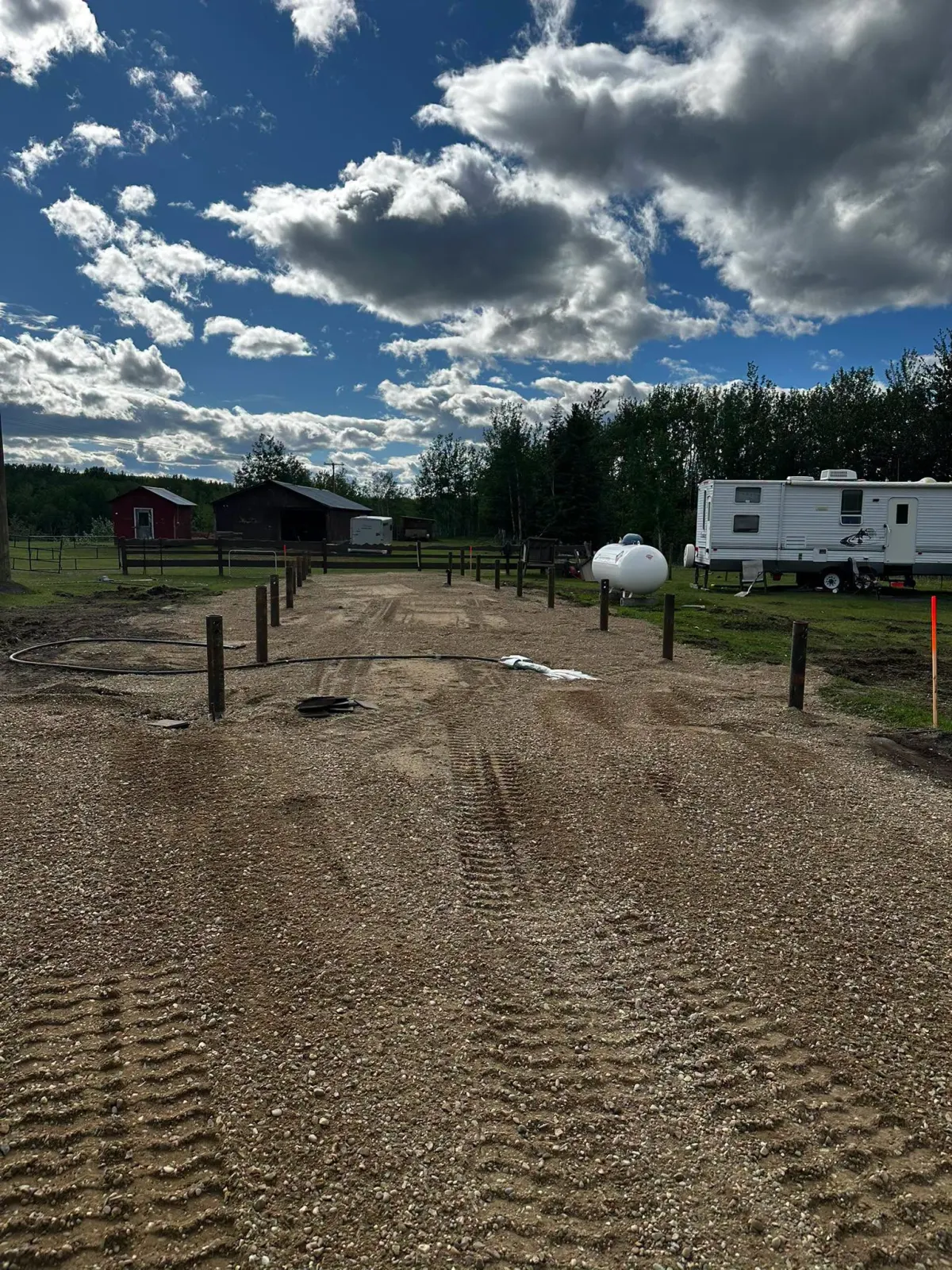
Screw piles are described by the shaft diameter, the size and number of helix plates, and the length. We commonly install two shaft sizes:
- 3.5 inch shafts for decks, small shops and lighter structures
- 4.5 inch shafts for homes, large shops, commercial buildings and industrial work
Helix size is matched to the soil. A larger helix spreads the load over more soil, which helps in softer clay. Length is driven by depth: in the Peace Region, piles are typically driven 10 to 25 feet to get well below the frost line and into competent soil. Sometimes a larger pile means fewer piles overall, and sometimes more small piles are the better value. That trade-off is part of the design.
Frost Heave and Adfreeze in Peace Region Clay
Our clay soils hold a lot of moisture, and wet soil freezes hard and deep. Two frost effects matter for piles:
- Frost heave: freezing soil expands and pushes upward on anything sitting in the frozen layer. Shallow footings feel this directly.
- Adfreeze: frozen soil bonds to the side of the pile shaft and tries to lift it as the ground heaves.
The fix is depth and anchorage. The helix plates sit well below the frost zone in soil that does not freeze, and that embedment resists the upward pull on the shaft. This is a big reason the depth and helix size on your design matter as much as the number of piles. Good site drainage helps too, because drier soil heaves less. Our foundation comparison guide covers how piles stack up against slabs and perimeter foundations in these conditions.
How Long Do Screw Piles Last?
Screw piles are made of steel, so the question is really about corrosion. Hot-dip galvanized piles in typical soils are designed for a service life measured in decades, in line with the building on top of them. What can shorten that:
- Corrosive soil: high salt or sulphate content, or very low or high pH
- Constant wet and dry cycling near the surface
- Damaged coating from rough handling before installation
Where soil is a concern, the engineer can specify a heavier wall, a thicker galvanized coating, or an allowance for corrosion in the design. If you have a soil report for your property, share it early.
How Long Does Installation Take?
Driving a single pile usually takes minutes rather than hours. A deck can often be finished in a few hours, and a typical residential pile field takes one to two days. Tight access, rocky ground or obstructions add time.
Because there is no concrete to cure, framing can start as soon as the piles are cut to height and the brackets are on. And because piles can be driven through frozen ground, you can install them in winter and be ready to build first thing in spring. See our winter construction guide for more on cold-weather scheduling.
Why Homes Need Engineered Pile Designs
For a small deck, a qualified installer can often lay out piles from experience. For a home, an addition, or most shops, you will need a foundation designed and stamped by an engineer. Here is why:
- Permits: building departments in the Peace Region generally expect engineered foundation drawings for habitable buildings and larger structures.
- Climate data: the design must use the correct snow load and frost conditions for your exact location.
- Verification: installation torque is recorded for each pile and checked against the design capacity, which gives you a paper trail for your inspector, insurer and any future buyer.
At KB Construction we work from engineered drawings, then drive the piles and build the structure on top. One contractor handles both, so the foundation is laid out for the exact building going on it. Learn more on our screw pile installation service page.
Frequently Asked Questions
How many screw piles do I need for a 30x40 shop?
A typical 30x40 shop in the Peace Region often lands somewhere around 12 to 16 piles. The final count comes from the engineered drawings, which account for the building's weight, snow load, door openings and your soil.
How far apart are screw piles spaced?
As a rough planning range, deck piles are often 6 to 8 feet apart and building piles 8 to 12 feet apart along the beams or walls they support. Heavier loads, longer spans and softer soil all push spacing closer. Your engineer or installer sets the actual layout.
How long do screw piles last?
Properly specified, hot-dip galvanized steel piles in typical soils are designed for a service life measured in decades, comparable to the building they support. Corrosive or very wet soils can shorten that, which is why soil conditions are part of the design.
How long does screw pile installation take?
Each pile usually takes minutes, not hours, to drive. A deck can often be done in a few hours and a typical residential pile field in one to two days. Access, rocky ground and the number of piles affect the schedule.
Can screw piles be installed in frozen ground?
Yes. Screw piles can be driven through frozen ground, so installation can happen in winter and you can start building as soon as the piles and brackets are in. No concrete curing is needed.
Get an Accurate Count for Your Project
If you are planning a deck, garage, shop, addition or home anywhere in the Peace Region, we can help you work out the foundation. Send us your building size and what it will be used for, and we will walk you through the next steps. Call (250) 219-5853 or request a free estimate. We serve Dawson Creek, Fort St. John, Chetwynd, Pouce Coupe, Taylor, Hudson's Hope, Tumbler Ridge, Grande Prairie and the surrounding area.