ICF Foundations in Northern BC: Why Insulated Concrete Forms Make Sense in the Peace Region
What Is an ICF Foundation?
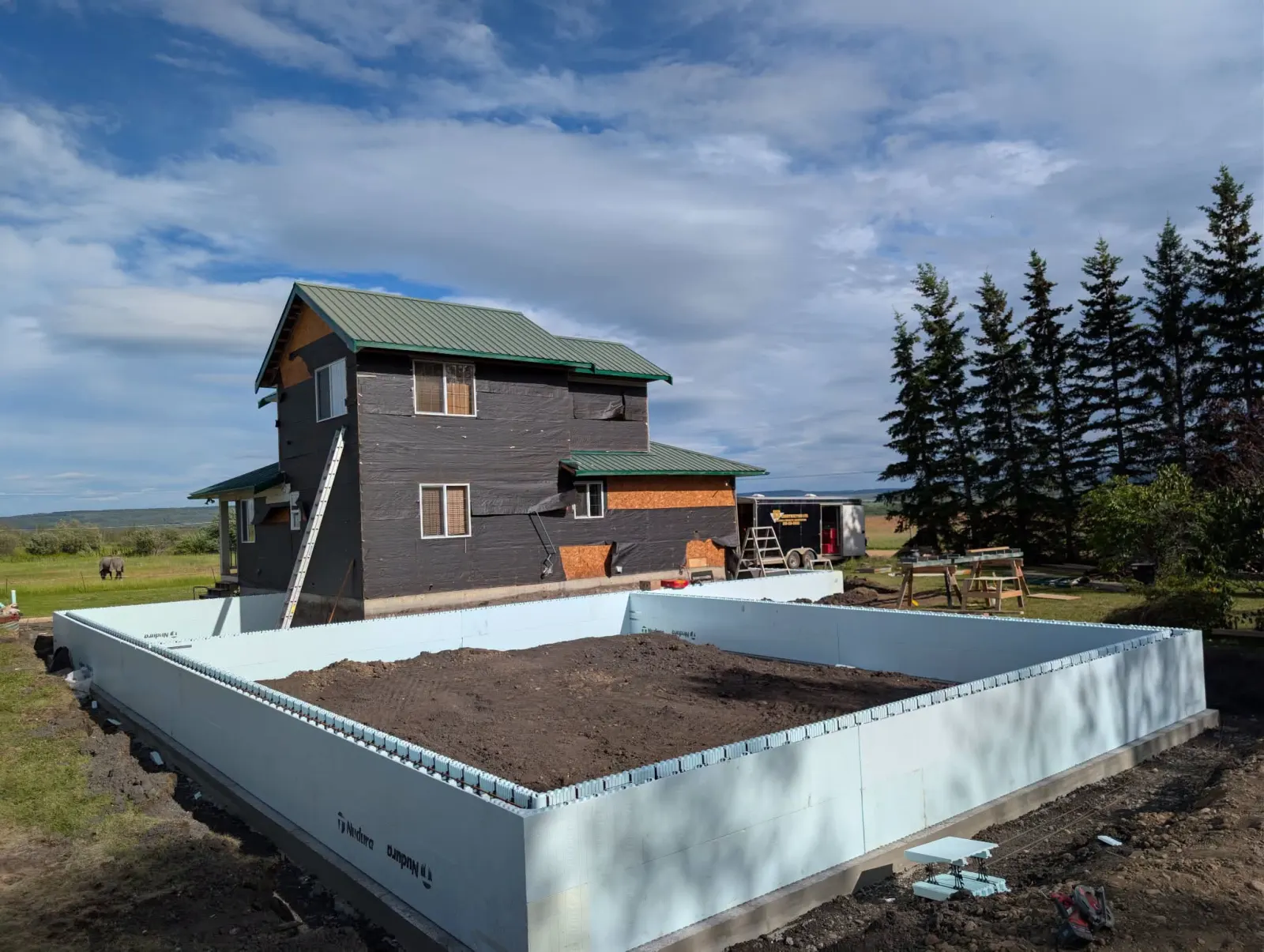
ICF stands for insulated concrete forms. Instead of building temporary wood or aluminum forms, pouring concrete, and stripping the forms away, we stack hollow blocks made of rigid foam, fill them with rebar and concrete, and leave the foam in place for good. The result is a reinforced concrete wall with a continuous layer of insulation on both the inside and outside.
In a climate like ours, that matters. A typical ICF wall delivers roughly R-22 or more of continuous insulation with no thermal bridging through studs. The concrete core gives you the strength and mass of a poured wall, and the foam keeps the cold out of your basement, crawlspace or garage.
This fall we finished the foundation for a home addition using ICF from the footings up. The photos in this guide come from that job, so you can see how the process actually looks on a Peace Region site.
Why ICF Suits the Peace Region
Frost is the big one. As we cover in our guide to frost depth and snow loads in northern BC, the ground here freezes 6 to 8 feet deep in a normal winter. Any foundation has to be designed so frost can't lift it. ICF helps in a few specific ways:
- Warm walls, warm floors: The insulation sits right against the concrete, so the wall stays near room temperature on the inside. That means less condensation, less mould risk, and a lower level that is actually comfortable to use.
- Less heat lost into the ground: Uninsulated concrete walls bleed heat into frozen soil all winter. ICF cuts that loss dramatically, which shows up on your heating bill.
- Better curing in cool weather: The foam acts like a blanket around the concrete while it cures. That makes spring and fall pours more forgiving than open forms.
- Strength: A properly reinforced ICF wall handles soil pressure and the uneven loads of our clay soils very well.
- Fewer steps: You don't have to frame and insulate the inside of the foundation wall afterward. The finish can go straight onto the form's built-in fastening strips.
How an ICF Foundation Goes Together
Every site is different, but most ICF foundations we build follow the same basic sequence.
1. Excavation and site prep. We strip the topsoil, dig to the depth the engineer calls for, and get drainage sorted out before anything else. Good drainage is half the battle against frost heave. For more on this stage, see our site preparation guide.
2. Footings with rebar dowels. Concrete footings go in first, formed with lumber and set below the frost line. Vertical rebar dowels are cast into the footing at regular spacing so the wall locks into it.
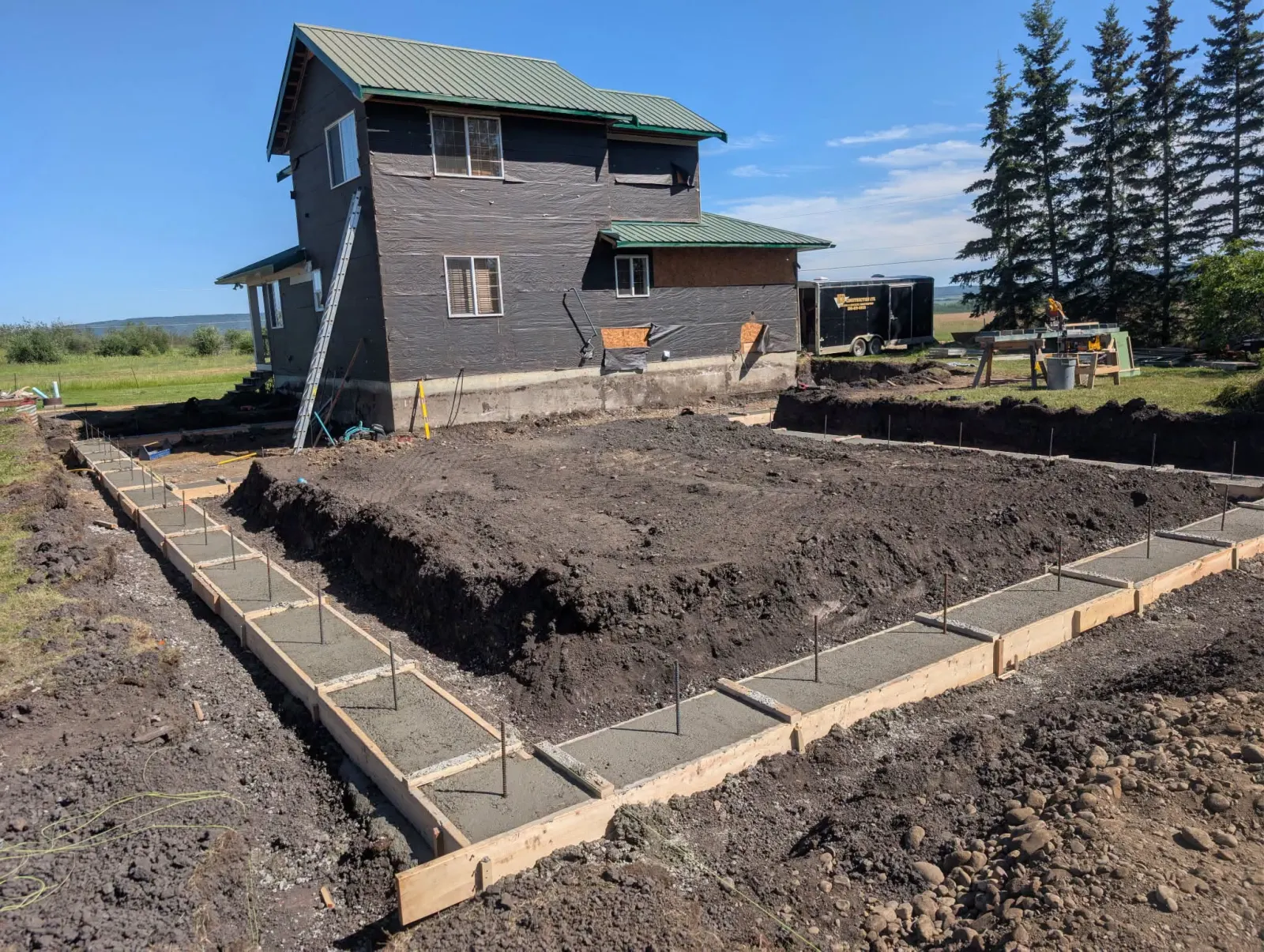
3. Stacking the forms. The foam blocks interlock like large building blocks. We stack them course by course, add horizontal rebar as we go, brace the walls straight and plumb, and frame openings for windows, doors and service penetrations.
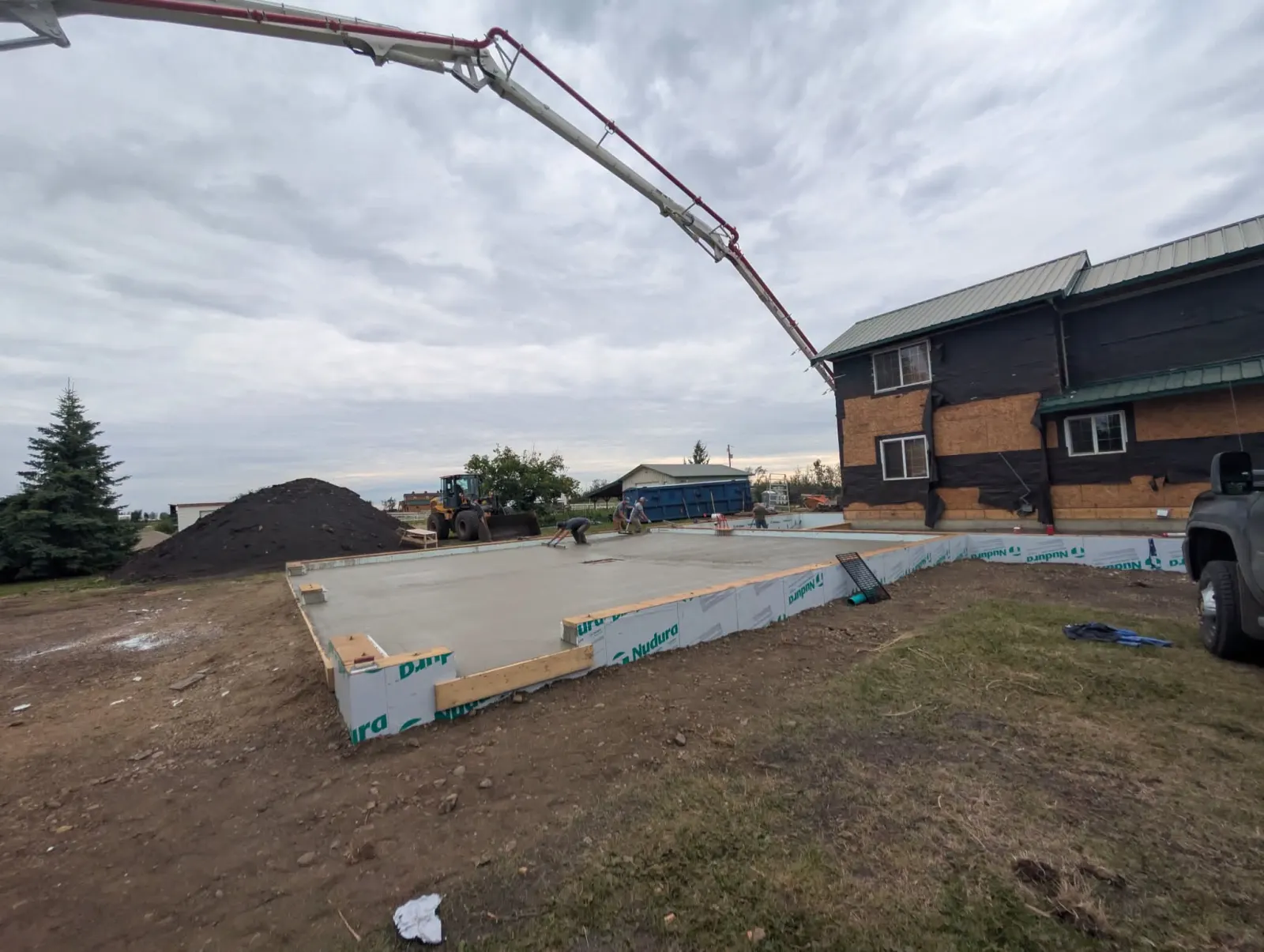
4. The pour. Concrete is pumped into the forms in lifts, usually with a boom pump. The crew watches for voids and keeps the walls aligned as the concrete settles. Once it's poured, the foam stays put.
5. Waterproofing, drainage and backfill. The outside below grade gets a compatible waterproofing membrane, perimeter drain tile and clean backfill. Never use a solvent-based product on the foam; it will eat it.
6. The slab. For a garage, crawlspace or basement floor, we lay rigid insulation under the slab, add vapour barrier, place reinforcing, and pour. An insulated slab inside an insulated wall gives you a warm, even floor and is the ideal base for in-floor heat.
ICF vs. Poured Walls vs. Screw Piles
ICF isn't the only good foundation in the north. Here's how it compares to the other two systems we install most. For a broader comparison, read choosing the right foundation for your build.
- ICF: Best when you want heated, usable space below the main floor or a warm slab. Higher form cost, but insulation is built in and energy savings continue every winter.
- Conventional poured concrete: Proven and strong. Formwork is reusable, so the wall itself can cost less. You'll need to insulate and frame the inside separately if the space will be heated. Our concrete forming services cover both conventional and ICF work.
- Screw piles: Fast, driven well below the frost line, and can be installed in the middle of winter. Great for shops, decks, cold storage and sites with poor soil. Not the right fit if you want a basement. If you're leaning that way, see how many screw piles do I need.
What Affects the Cost of an ICF Foundation
We don't publish a price per square foot, because two foundations of the same size can be very different jobs. These are the factors that move the number most:
- Wall height and length: A full basement uses far more forms and concrete than a frost wall or crawlspace.
- Soil and water: Wet clay, high groundwater or rock means more excavation, more drainage and sometimes engineered fill.
- Engineering requirements: Rebar size and spacing, footing width and any special details all come from the engineer.
- Access: Tight sites, like an addition squeezed against an existing house, take more time and planning for pump and truck access.
- Season: Late fall and winter pours add the cost of heat, blankets and ground thawing.
- What goes inside: Under-slab insulation, in-floor heat lines and plumbing rough-ins are added before the slab.
When you compare quotes, compare the finished result. A poured wall that still needs framing, insulation and vapour barrier is not the same product as an ICF wall that's ready for drywall.
ICF for Home Additions
Additions are where ICF really earns its keep. The new space needs to feel like part of the house, not a cold room tacked on the side. An ICF foundation gives the addition a lower level that matches or beats the original home for comfort.
The details that matter most are where old meets new: tying the new footings and walls to the existing foundation the way the engineer specifies, keeping drainage moving away from both, and sealing the joint so frost and water can't work into it. Our home additions guide walks through the rest of the planning process.
Building ICF Through the Cold Months
ICF is more forgiving in cool weather than open forms, but it doesn't make winter disappear. Concrete must never be poured onto frozen ground, and footings and slabs need protection until they've gained strength. If your project is starting late in the season, the plan usually looks like this:
- Get the excavation and footings done before the ground freezes hard.
- Use heat and insulated blankets on footings and slabs during cold snaps.
- Backfill and close in as quickly as practical so frost can't get under the new work.
For more on what's realistic once the snow flies, read our winter construction guide.
Frequently Asked Questions
Is an ICF foundation more expensive than a regular poured foundation?
The forms themselves usually cost more than reusable plywood or aluminum forms. But ICF leaves the insulation in place, so you skip a separate insulation and framing step on the inside of the wall. For a heated basement, crawlspace or garage, the overall cost often comes out closer than people expect, and the heating savings continue for the life of the building.
Do ICF footings still need to go below the frost line?
In most cases, yes. ICF walls sit on conventional concrete footings, and those footings follow the same frost depth rules as any other foundation. Some engineered designs use a frost-protected shallow foundation with rigid insulation, but that has to be designed for the specific site.
Can you pour an ICF foundation in cold weather?
ICF handles cool weather better than open forms because the foam insulates the curing concrete on both sides. The footings, the ground, and the slab still need protection from frost, so late fall and winter pours need planning, heat, and blankets. Spring through early fall is the easiest window.
Is ICF a good choice for a home addition?
It is one of the better options. An ICF foundation gives the addition a warm, dry lower level or crawlspace that matches or beats the existing house. The key details are tying into the existing foundation correctly and managing drainage where the old and new meet.
Should I choose ICF or screw piles?
Choose ICF when you want usable, heated space below the main floor or a warm slab, such as a basement, crawlspace or heated garage. Screw piles make more sense for shops, decks, cold storage and sites where speed or winter installation matters most. Many projects use both.
Thinking about an ICF foundation for your home, addition or garage? Get in touch for a free estimate or call us at (250) 219-5853.